Intersections: NEAT Backs the 2021 Immigration Action Plan to Reimagine and Repair a Broken System
Posted 8/27/2020
Intersections shines a light on NEAT's work on issues that have not traditionally been viewed as LGBTQ+. While these issues are not exclusive to our community, they often hit LGBTQ+ people disproportionately hard. Explore all of our issues on our work page.
The immigration system in the United States is broken, a statement that resonates across political lines. Although the process and how it is run harms many individuals and families, LGBTQ+ people are affected in very specific ways. LGBTQ+ people frequently seek asylum because of persecution or violence against them in their home countries. Often rejected by their families, they lack the support structures many other immigrants can rely on. They may also be turned away by community organizations that refuse to serve LGBTQ+ people. In 2018, the Center for American Progress published a helpful and thorough overview of these issues.
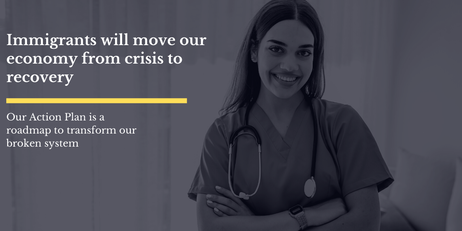
That is why NEAT is proud to join more than 170 of the nation's leading immigration and advocacy organizations in releasing the 2021 Immigration Action Plan. Led by Immigration Hub and America's Voice, the Plan clearly lays out 10 points that should guide policy and programmatic overhauls of the system. The Plan centers on humanitarian rights, rebuilding the economy, and moving beyond the racism and damage of the current administration and its predecessors.
Read the 2021 Immigration Action PlanRead the Center for American Progress overviewTen Actions to Transform and Modernize America's Immigration System
- Action 1: Prioritize Equity and Harm Reduction in the Immigration System.
- Action 2: End the Anti-Black and Discriminatory Targeting of Certain U.S. Citizens and Immigrants.
- Action 3: Rebuild the U.S. Economy.
- Action 4: Re-envision Leadership in the Next Administration.
- Action 5: Decriminalize Immigration.
- Action 6: Protect Immigrant Children, Families and Their Communities.
- Action 7: Phase Out Immigration Jails and Fund Community-Based Case Management Programs.
- Action 8: Establish Thriving, Rights-Respecting Borders.
- Action 9: Reimagine the Role of the Immigration Courts.
- Action 10: Restore the Right to Seek and Receive Protection from Persecution, Torture, and Other Serious Human Rights Violations.
NEAT Joins Supreme Court Brief Against Using Religion to Discriminate
Posted 8/24/2020
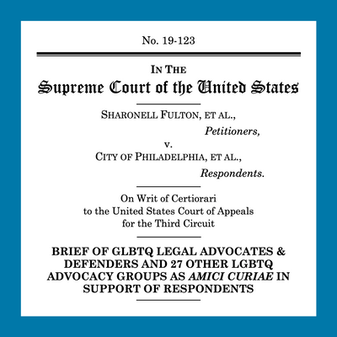
Last week NEAT was proud to join the "friend of the court" brief authored by GLBTQ Legal Advocates & Defenders (GLAD) for the upcoming U.S. Supreme Court case Fulton v. City of Philadelphia (see below for more information on the case). The brief clearly outlines the evolution of LGBTQ+ rights in the United States and points out that the exemption sought by Catholic Social Services would have broad and breathtaking implications. Allowing discrimination against US citizens, even if based on religious beliefs, would be a dark turn for the country. This is especially true when the services in question are funded by taxpayers.
Read the GLAD amicus briefWhat is Fulton v. City of Philadelphia about?
On November 4, the U.S. Supreme Court will hear a case on whether religious organizations that receive public funds to provide foster services can use their religious beliefs to deny service to LGBTQ+ parents (and potentially others they "disagree" with, like single parents, Jews and Catholics). The dispute itself is between the City of Philadelphia and Catholic Social Services, but the outcome will reverberate across the country.
Philadelphia enters into contracts and provides public funds to a variety of agencies to provide foster care services for children in the welfare system. One of the standard clauses in a contract with the city is that a provider must comply with nondiscrimination ordinances adopted by the government. In 2018, Philadelphia learned that two of the agencies they contracted with refused to license same-sex couples to be foster parents, claiming it would violate their religious beliefs.
Based on the violation, Philadelphia canceled the contract with Catholic Social Services, who then sued the city. The main contention is that the agency's constitutional right to religious beliefs has more weight than the municipal nondiscrimination laws. This is one of the many battlegrounds in the evangelical campaign to carve out religious exemptions as a legal way to treat LGBTQ+ people as second class citizens.
CommentsShare on TwitterVolunteer Spotlight: Sara (MA)
Posted 8/18/2020
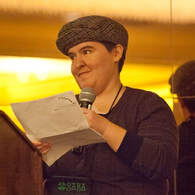
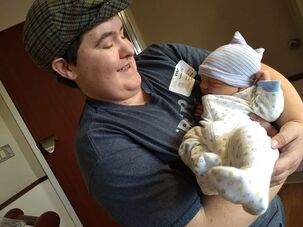
Spotlight showcases the work of NEAT supporters who are the backbone of what we do every day for LGBTQ+ Justice.
Name: SARA
Pronouns: SHE / HER
Age: 38
State: MASSACHUSETTS
Tell us about yourself outside of NEAT volunteering! (e.g. work, family, hobbies)
I live with my 3 human roommates and one cat-mate in an apartment we have affectionately named the Eastern Avenue Space Academy. I currently work full time and attend seminary part time studying to become a pediatric chaplain. Starting in October I'll be leaving my current job to fulfill my field education requirements. I will be interning locally 15-20 hours a week at a hospital and virtually 10-15 hours per week with a UCC church in Birmingham pastored by a lesbian. In my copious free time, I enjoy reading widely, watching Netflix, and trying new beers.
What's your connection to LGBTQ+ justice work?
As a cisgender bisexual woman, a connection to LGBTQ+ justice work has been part of ensuring my own survival and those of my chosen family and friends. I was involved for a number of years with a now defunct conference for GSRM (gender sexuality and relationship minorities) called the Transcending Boundaries Conference. I also am involved with Dignity USA (a national organization for LGBTQIA+ Catholics and their allies). One of my major goals in becoming a hospital chaplain is to provide a supportive presence for LGBTQ+ families and people, particularly young people and the elderly, at a vulnerable time in their lives. I also hope to serve as an educational resource for my fellow chaplains who may not be part of the LGBTQIA+ community.
What is your volunteer role(s) at NEAT? What inspired you to get involved?
I became connected to NEAT during the 2018 campaign to keep a law that guaranteed protection for trans people in public accommodations in the state of MA. I try to phone bank 1-2 times per month.
Share a memory from volunteering that sticks out in your mind.
There were a couple of times I got my Dad to phone bank with NEAT as well.
What would you say to anyone considering volunteering with NEAT?
You can do it! It's definitely hard particularly if you're shy like me, but the NEAT team (particularly Brian) provides great training and support, and the work is so important.
CommentsShare on TwitterArchives
- September 2021
- August 2021
- July 2021
- June 2021
- May 2021
- April 2021
- March 2021
- February 2021
- January 2021
- October 2020
- August 2020
- July 2020
- June 2020
- May 2020
- April 2020
- March 2020
- February 2020
- January 2020
- December 2019
- November 2019
- October 2019
- August 2019
Categories
AllRSS FeedExplore NEAT
